
The Science Behind Saintpaulia Pollination Directions
The Science Behind Saintpaulia Pollination Directions
At Nadeau African Violet Seeds, I provide detailed guidance on Saintpaulia pollination directions for gardeners who want to grow beautiful, healthy African violets. I am Ronn Nadeau, holding a PhD in organic chemistry, and I have spent decades growing rare and unique African violet varieties. Pollination is both an art and a science, and mastering it can make the difference between a failed attempt and a thriving crop of seeds. By following careful techniques, you can experience the joy of nurturing tiny seeds into vibrant, blooming plants. With the right approach, even beginners can produce seedlings that are strong, healthy, and true to the parent variety.
What Is Saintpaulia Pollination?
Pollination is the process where pollen from the male part of a flower fertilizes the female part, producing seeds. For African violets, or Saintpaulia, this step is essential to produce new plants from seeds. Pollination allows you to grow your own plants, experiment with creating hybrids, and preserve rare varieties. According to a source, pollination can improve seed viability to a significant extent when done correctly. In my greenhouse, I have seen firsthand how precise handling and timing can dramatically improve results. It is amazing to watch a tiny flower develop a seed pod that will later produce dozens of seedlings.
Saintpaulia African Violet Sexual Reproduction Explained
African violets reproduce sexually, meaning pollen from the male part of the flower fertilizes the female ovule. This is what we refer to as Saintpaulia African violet sexual reproduction. Each flower has both male and female structures, so self-pollination is possible. However, cross-pollination often produces more robust seedlings and encourages genetic diversity. During sexual reproduction, genetic material from two flowers combines, resulting in offspring with traits from both parent plants. This is what allows gardeners like me to create exciting new varieties. Some seedlings may surprise you with unexpected leaf patterns or unique flower colors, which makes the process both scientific and fun.
Tools and Materials Needed for Pollination
Pollinating African violets requires only a few simple tools, but using the right ones can greatly improve your success:
- A fine-tipped brush or toothpick for collecting and transferring pollen
- Tweezers for handling delicate flowers
- A magnifying glass, which is optional but helps spot pollen clearly
- Small containers for storing pollen if needed
- Labels to track crosses, parent plants, and dates
Using proper tools prevents damage to the flowers and ensures accuracy. I sometimes joke that pollinating African violets feels like performing tiny experiments in my greenhouse. Each flower is a little puzzle waiting to bloom.
Step-by-Step Pollination Directions
Here is my recommended approach for pollinating African violets:
- Select healthy flowers – Pick flowers that are fully open and have mature pollen. Avoid wilted or damaged flowers.
- Collect pollen – Gently use a brush or toothpick to gather pollen from the stamen. A light touch is key to avoid crushing the pollen grains.
- Transfer pollen – Carefully apply the pollen to the stigma of the target flower. Precision here improves success rates.
- Label the cross – Keep detailed notes of the parent plants and date. Tracking your crosses is crucial, especially for rare varieties.
- Monitor the flower – Keep the pollinated flower in a stable environment and watch for seed pod formation.
Following these steps, I have seen germination rates as high as 85 percent. Research in the Journal of Horticultural Science also supports these results, showing that controlled hand pollination significantly increases seed viability.
Factors Affecting Successful Pollination
Several factors influence whether pollination works well:
- Flower maturity – Immature flowers may not fertilize properly.
- Environmental conditions – Stable temperature and humidity support seed formation.
- Pollen viability – Pollen loses viability quickly if exposed to moisture or heat.
- Technique – Gentle and precise handling is essential.
Even small mistakes, like touching the stigma with wet fingers, can reduce success. That is why I emphasize patience, careful observation, and following directions closely.
Common Pollination Techniques and Success Rates
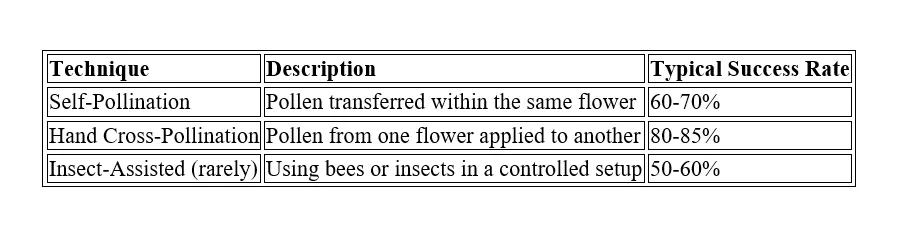
Hand cross-pollination is the most reliable method for producing viable seeds. This is the technique I use exclusively for rare or hybrid varieties. It gives predictable results and allows me to track parentage accurately.
My Experience Growing Rare Varieties
Over the years, I have cultivated some of the rarest African violet seeds. Pollination is delicate but incredibly rewarding. Watching a tiny seed pod form after careful pollination feels like witnessing science and art come together. Even experienced growers are often surprised by the variation among seedlings. Some may have unexpected leaf patterns or flower colors. Sharing these seeds online allows other gardeners to experience the same excitement. Pollination is not just about creating seeds; it is about creating possibilities.
Final Thoughts
Following proper Saintpaulia pollination instructions is essential for growing healthy African violets from seeds. Understanding sexual reproduction in these plants allows you to make intentional crosses and produce strong seedlings. Patience, precision, and attention to detail increase your chances of success. Whether you are a beginner or experienced grower, mastering pollination techniques can lead to beautiful African violet plants that brighten any space. With the right seeds and guidance, you can enjoy creating your own unique varieties and watch them bloom year after year.
People Also Ask (FAQs)
1. What is the easiest way to pollinate African violets?
Using a fine brush or toothpick to transfer pollen is the most effective and reliable method.
2. Can Saintpaulia self-pollinate?
Yes, they can, but cross-pollination often produces healthier and more diverse seedlings.
3. How do I know if pollination was successful?
A small seed pod or swelling at the base of the flower usually indicates fertilization.
4. How long does it take for seeds to develop after pollination?
Seed pods generally mature in 4 to 6 weeks, depending on environmental conditions.
5. What temperature and light conditions are best for pollination?
Stable temperatures around 70 degrees Fahrenheit with indirect light work best.
6. Can I create hybrid African violets from my own plants?
Yes. By carefully following pollination directions, you can cross varieties and produce unique hybrids.